
Tycoon games are easily one of my favorite type of games, right next to RPGs and simulation games. Of course, the big issue is that what exactly constitutes a tycoon game can be somewhat anomalous. Yes, most tycoon games tend to have some management aspect in them, and they also do tend to have some aspects of building.
While I’m not necessarily going to get into that whole can of worms right now, I wanted to lead with that to give you fair warning that there might be a game or two on here that you might not necessarily consider a tycoon game, but that is generally considered one. Am I afraid of random internet people @ing me? Absolutely not *cough*
Joking aside, there are tons of tycoon games with some of the best ones being made a decade or two ago, so for this article, I’m going to try and keep to tycoon games that have been released in the past five years or so. I might fail on a game or two, but for the most part, the games on this list should be fairly recent. And yes, even though there’s a never-ending fight between PC vs Console, the majority of these games are PC exclusives (sorry console folks, we’re retaliating for those awesome PS4 exclusives).
So, with those disclaimers out of the way, let’s check out some of the best tycoon games out there. 🖥️ 🎮
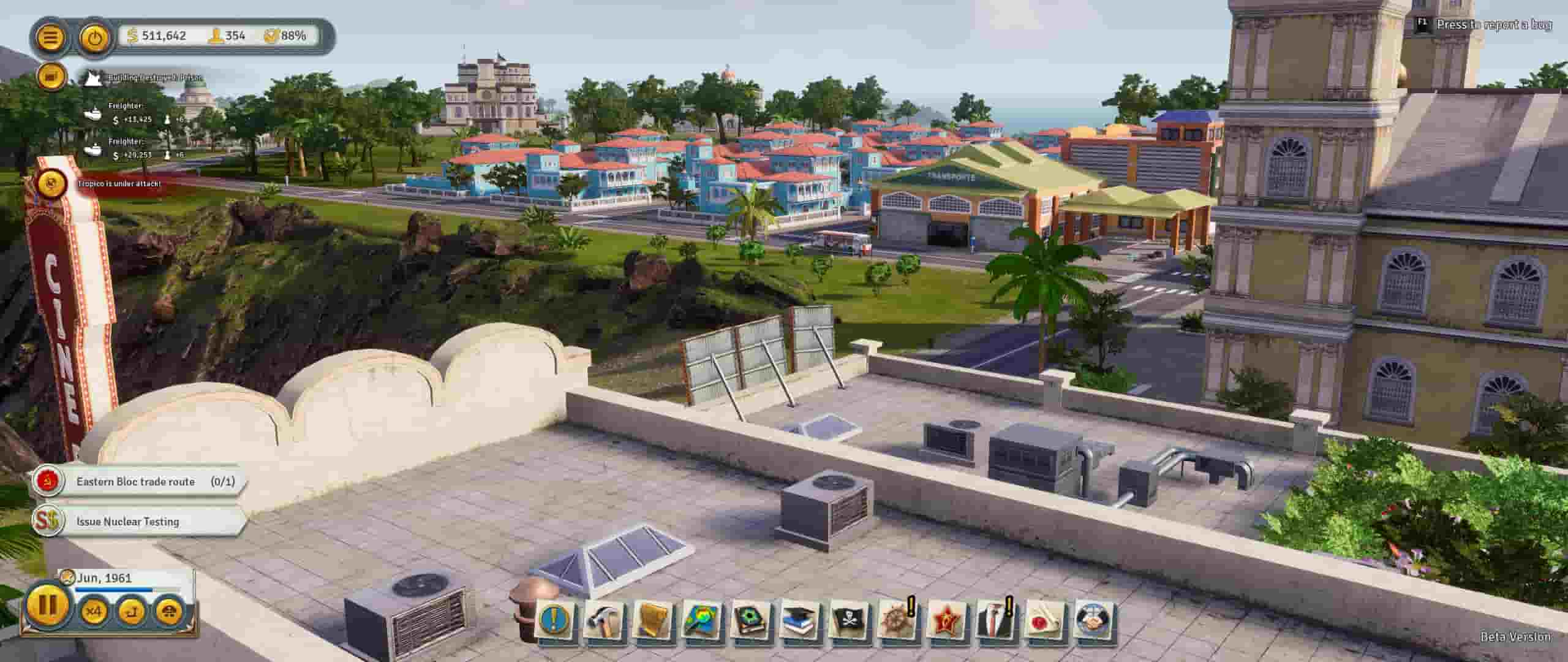
#1 Tropico 6
Being the leader of a banana republic isn’t easy. There’s all the fancy parties you have to go to, the big mansion to keep maintained, your fleet of cars, a private jet or two, oh . . . and of course leading a nation, there’s that too. It’s never a dull day, is it?

Tropico 6 is a great sequel, adding more of the same although not going too far out of the box for it to be truly innovative. That being said, there’s a lot of interesting changes to the game, such as the expansion of policies that include buffs for certain buildings, as well as the many, many new buildings that you’d expect. Also, some fans consider this one of the best RTS games available, so if you’re a strategist, you should give ti a try.
Unfortunately, it’s not all unicorns and rainbows, and the game does tend to muddle a little bit when it comes to keeping your population happy, as they always seem to have the banana republic blues. While there is a sandbox mode, the real fun is in the campaign, which is presented to you in a sort ‘the good old days’ style, with Penultimo, your most ardent supporter, goes over some of the most glorious achievements of his . . . I mean your past.
While for the most part, the campaign missions tend to act as a tutorial, there’s tons of fun to be had, especially since quite a few missions have unique requirements or environments, such as that time when you tried to lead a pirate society from an island that was basically covered in lava.
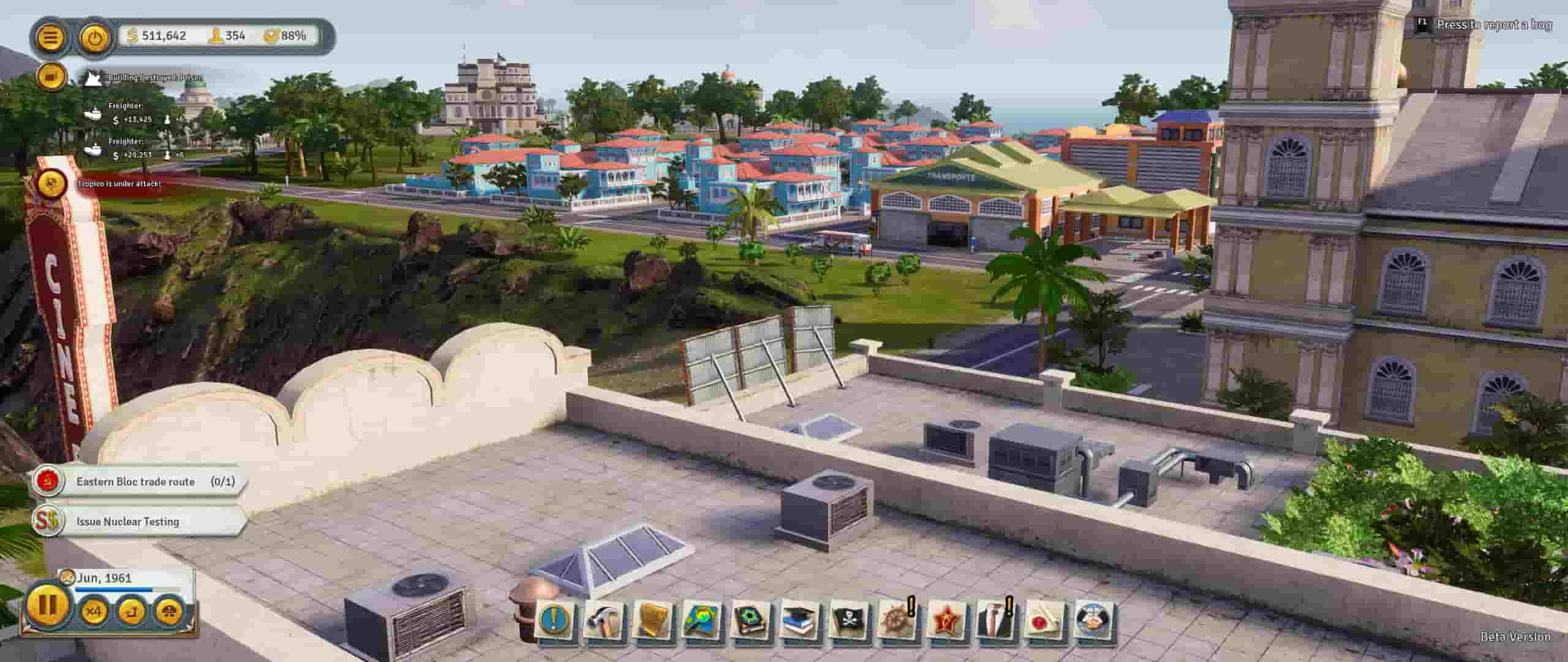
Honestly, I found the campaign in Tropico 6 much more enjoyable than 5, and I always wanted to do just one more mission (I didn’t sleep much in the first few days it came out).
Unfortunately, the island is not the paradise it seems to be, and as I alluded to earlier, keeping people happy and your economy running is much more challenging than in Tropico 5. For one thing, just like in Tropico 5 faction provide you with missions but now you’ll get special missions where two factions are asking to resolve the same problem in two different ways.
Ultimately, whichever way you choose to solve their mission, you’re going to upset one faction, which makes it pretty difficult to keep up with all the demands and requests. You could also ignore them at the cost of political favors (something that you buy with your swiss bank account money on the new black market), and even if you don’t, sometimes neither solution benefits you and can actually be detrimental.
That brings me to the economy, which always seems like it’s on the brink of collapse and for a tycoon game, that’s not necessarily that great. The truth is, it’s hard to know sometimes what you need to do to bring things back in line, and that illusion of your economy looking great but no actually being great can be frustrating when you’re also trying to keep people and factions happy.
The worst part is that once you start going into the negatives, it becomes pretty hard to recover, and I suspect there’s a positive feedback loop somewhere in the balancing but I simply can’t tell.
All that being said though, Tropico 6 is a very, very fun game, and I wouldn’t have kept playing it for several days in a row if I didn’t enjoy it. Sure, it has some balance issues but it’s to be expected in a game that has an extra layer of depth that didn’t exist before. I’m certain that over the next few years Tropico 6 will receive a lot of updates that should help fix or at least alleviate some of the issues.
#2 Parkitect
One thing that I didn’t really like about Planet Coaster was that it’s more focused towards just plain creativity and creating rides, rather than the management and simulation aspect. This is an issue that Parkitect fixes and actually balances the creative part with the management part really well. Of course, it is a much smaller production, but its small beginnings belay the depth of a fun game.

Since we are talking about management, we should probably start with that. While most traditional rollercoaster games allow you to plop down a shop and leave it at that Parkitect actually has a supply chain system backing it up. This means that you’ll have to actually move packages from a distribution center (yes that’s a thing) to the variety of different shops around your park.
It might seem like a bit micromanage-y, but really it’s adding another layer of strategy and requiring you to actually think about what you want to put where, which actually makes the whole experience meaningful. Similarly, there’s an employee-only path, because let’s be honest, when you’re in a rollercoaster park you don’t really want to see the employees doing their thing (that’s an easy way to lose the magic after all).
As you can imagine pathing makes up a part of keeping your guest’s immersion high, which in turn makes them happier. It also makes things a bit more difficult, since you now have to figure out the placement of rides and guest pathing, which just adds to the layer of strategy required.
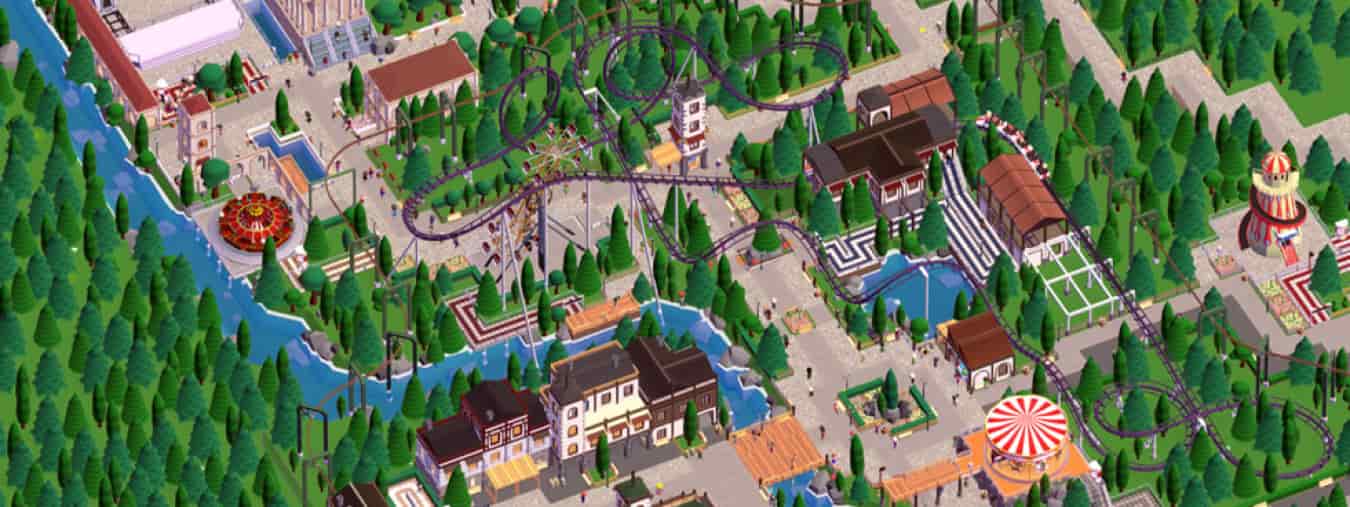
As for the ride building, it certainly isn’t as complex as Planet Coaster and mirrors the old school Rollercoaster Tycoon games more. For those of you who have played Planet Coaster, you’ll sorely miss things such as the auto-complete function or just tons of freedom you have with building out your ride in any way you want.
Heights are even more of a pain to deal with because the UI can be a little bit confusing because it’s all done in fractions, and honestly I’m quite terrible at them and would rather just not.
This brings us to the main thing that detracts from the game, which is the overall UI design which doesn’t really reflect how vibrant the game is. Yes, there’s an overall minimalist style, but the greyed look isn’t doing the game any favors, and it can feel a little bit boring and dull. Really, the whole UI and general presentation of the game is pretty muted, which is atypical for a game that revolves around building a super fun park.
At face value Parkitect seems like a simple and small rollercoaster tycoon game, but in reality, there’s quite a lot that lies beneath the waves. If you’ve wanted Planet Coaster with a bit more management, then Parkitect will scratch that itch (at least, it certainly scratched mine). Oh, and to top it off, the game is relatively cheap when compared to other tycoon games if it’s quality.
#3 Megaquarium
You know, I’ve had my fair share of pets: Cats, dogs, birds, turtles, fish and even horses, and out of all of them probably the most difficult to take care of were the fish. Yeah, it might seem somewhat counterintuitive, they’re small and don’t eat much so they shouldn’t be hard to maintain?

Nope, since fish can’t communicate to you the same way other animals can you really have to be on top of your game, making sure they’re healthy, the water is clean and that they have enough cover to hide when they are stressed.
To that end, Megaquarium actually does a pretty good job of covering all the needs and requirements that go into taking care of a variety of different fish. In a sense it’s almost like a puzzle you need to figure out: Do they need better filtration? Different temperature? How about the logs and seaweed are they the right type?
For the most part, though, the tools you use to solve these puzzles are pretty simple. You have your tank that you can make into different sizes, pumps, filters, and the different tank decorations. When you start out it’s a simple matter of just making a tank, adding a pump and filter and just putting in one type of fish and that’s it, you’re guests can enjoy the view.

Unfortunately for you, that gets old fast and you aren’t going to be raking in the money until you start having larger and larger tanks with increasingly complex ecosystems.
Much like Parkitect, there’s an immersion factor to all this, and you have to build rooms behind or near your tanks to house all the aforementioned gear, as well as the work the employees do. This becomes more and more difficult as you realize that you’ll have to connect pumps to several tanks to make things a bit cheaper and easier to handle.
This is where a lot of the game’s strategy comes in, where room and tank placement has to be done with the future in mind.
Once you’re past that layer and you discover the joys of massive tanks, you have to start worrying about how you’re going to mix different aquatic life. Some fish are really aggressive to others (if you’ve ever owned a Betta fish you’ll know what I’m talking about), while others are opportunity feeders and require other aquatic life to survive. It’s a rather complex puzzle you have to solve and it can certainly be overwhelming if you try and go too fast too soon.
Megaquarium might seem like a difficult game masquerading as a simple one, but it’s actually really well balanced. I would even put it in the same camp with other ‘zen’ games like farming simulator or euro truck simulator 2, where you do have to pay some attention, but for the most part, the game flows really well. And hey, if you’ve ever wanted to own fish, this is a reasonably good stepping stone to give you an idea of the difficulties involved.
#4 Transport Fever
If you’ve ever played Train Fever then you’re going to absolutely love Transport Fever, the successor to it. Much like you’d expect, a lot of the game revolves around the logistics of transportation for both passengers and cargo. While Train Fever mostly focused on trains, Transport Fever also adds airplanes and boats for you to transport your stuff over vast distances, even if there’s water involved.

Staring out in 1850, you can choose to be in either America or Europe and expanding your empire in a pretty historically accurate game. Old vehicles with tiny capacity are rife in those olden days and a lot of the struggle revolves around just setting up a few bases and getting the transportation going. As you move through time things get easier with better and better vehicles, although you’ll still mostly be focusing on trains for the most part.
This is actually one of the problems in Transport Fever, that difficult can very wildly. In some games I was making so much money I was literally not caring about any waste, just throw stuff down and I’m good. On other games, it was much more difficult and I was constantly struggling to remain solvent.
But really where this issue comes from is the way that resources are spread out, seemingly in a completely random way. That makes it really difficult to set up a production chain and serve different cities with a variety of different products. You could somewhat ignore serving cities with products, but then you’d bypass one of the best parts of Transport Fever, and that’s the dynamic cities.
You see, as you provide more passenger transport and products to cities, they grew, a feature which you don’t really see in many other games. Growth is also variable based on how much you provide for them, so you can get really stuck-in with a specific town, or a few, and really feel a connection with them.
Of course, as your empire grows you will ultimately have to expand to the whole map, but those first few cities are the ones that will always be in your heart.
Overall, transport fever is a truly fun game with a few stumbling blocks here and there. The variable difficulty in maintaining your economy and the seemingly random spread of resources presents an interesting although slightly frustrating challenge. Even so, it’s certainly worth a buy.
That being said, if you’re still on the fence, you’ll be happy to know that Transport Fever 2 is due out sometime in Q4 2020, so it’s right around the corner, and I’m very much looking forward to it.
#5 Project Highrise
High-rise buildings have been a part of the Tycoon genre for a while now, although there’s certainly very sparse and not easy to find. Thankfully, Project Highrise does an excellent job of filling in the gap, being both a pretty fun vertical tower builder. It’s also an excellent game in its own right, which is why I put it on the list in the first place.

So, what’s the game all about? Well, for the most part, you’re in charge of a building and it’s your job to not only fill it up with constituent parts, but also to just build up a high as you can get it. It’s not as simple as it seems though, because much like Parkitect and Megaquarium, a large part of the game is spatial planning and trying to account for how you want to build down the line.
For example, there’s a few different utilities in the building and each different room type requires specific types of utilities. The problem is that you can only route the utilities through the utility closet, and they actually need to be stacked on top of each other to actually make the connection.
Same goes with the elevator. So ultimately, you need to think from the beginning how you want to space these things out; Do you put one utility closet and then just stretch outlines to each room, eating the cost, or do you build two or even three stacked lines, making it cheaper to build out but costing more in daily maintenance.

This type of question is rife in Project Highrise, and applies to the way rooms are built too. There are four types of rooms: Residential, Office, Restaurant and Shops, and each one have it’s different needs and preferred placements.
For example, Restaurants like to be in high-traffic areas because they rely on that traffic to make a profit, whereas residential rooms and some office spaces absolutely hate high-traffic areas. Similarly, luxury apartments prefer being higher and want more amenities such as cable.
Thankfully, you do have tools to make your life easier in the form of Buzz and Influence. Both of these are acquired as you play, mostly from the popularity of your building, it’s prestige and the services you offer.
Buzz generally allows you some sort of buff for a 24h period, such as half of the maintenance costs, or cheaper building. Influence, on the other hand, allows more physical changes, such as building higher or opening up different types of decorations which give buzz.
Honestly, though, all of this tends to get a little bit overwhelming and exhausting, especially if you’re going for a more difficult scenario or game. If you make one mistake at the beginning with your planning, it’s incredibly difficult to fix and you’ll end up spending tons of money just to make small alterations.
Now, that being said, I don’t know if I would consider this a bad thing as part of the challenge is good forward-thinking and planning ahead, so if everything was easy, the game wouldn’t be as fun. As such, Project Highrise gives you an idea of how it feels like to manage and run your own skyscraper; A difficult and frustrating slog that is very satisfying when everything goes right.
#6 Two Point Hospital
I was actually really excited when Two Point Hospital came out, as it’s the spiritual successor of Hospital Tycoon, which in my opinion is one of the best old school tycoon games out there. While Two Point Hospital captured a lot of the fun and zany humor of the genre, I don’t feel that it really hit the glory days of the Tycoon Hospital.

That being said, I’m probably just looking at Tycoon Hospital with rosy glasses, and to be absolutely fair to Two Point Hospital, it’s an excellent game in its own right.
So, as you might have gathered, Two Point is actually a fictional place where people are apparently super, super sick. The main missions take you through a total of 15 hospitals, each with their own unique requirements and oddities. To get to the next hospital in line you need to get the hospital yours in rated a certain number of stars, which is based on the quality of your staff, service and things you can heal.
Since each hospital opens up different things progressively, you actually end up having to jump back and forth between your new hospitals and your old ones, trying to aggressively squeeze out a star here or there.
While it can certainly be fun upgrading some of your older hospitals into fully-fledged ones, it can get a bit frustrating having to go backtrack is if you’re playing a Resident Evil game. That being said, it isn’t too bad for the most part and it doesn’t happen too often.

Aside from that though the game is just loads of zany and wacky fun. Taking the approach of using fictional disease you’ll find the gamut of things such as light bulb heads (that need to be unscrewed) or Freddie Mercury impersonators (not sure why you’d want to cure that). Of course, each disease requires its own unique type of treatment, which itself usually tends to be equally zany and hilarious.
Really though, the big thing you tend to have to worry about is queues, because as I said, Two Point apparently has the highest density of sick people on the planet. Since doctors can both diagnose and treat, you have to decide where you want to put your budget into.
Doctors (and nurses) can also level up and pick up specific skills that you can train them with, which ultimately makes you have to go through another agonizing choice of what you should put your focus on.
Thankfully, the game does a truly excellent job of providing you with information, and if you see a patient storm off without treatment, the game will tell you exactly where the issue was. You could have long queues, doctors who don’t know how to diagnose that specific disease or a myriad of different things.
Honestly, I’m really happy with the level of detail put into providing you with information, something you don’t really tend to see in most games, especially tycoon games like Tropico 6 where you’re mostly left trying to guess what’s going wrong.
Two Point Hospital does a great job of immersing you into the world of a purely insane medical world that makes very little sense and is completely hilarious. Sure, it has some issues here in there, but overall it’s a fun tycoon/management game and well worth the purchase. Oh, and if you’d prefer something that’s a little bit more realistic, you can check out Project Hospital.
#7 Cities: Skylines
I feel that this game really doesn’t require any kind of introduction or anything really. One of the most popular games by Paradox, as well as the best city builder, if you’re playing tycoons or management games, then you should have played Cities: Skylines. But hey, for those of you who have been living under a rock your whole lives, I guess I’ll go over it.

As the name may suggest, the game is all about building cities, starting from nothing but a few small roads and houses to a whole metropolis with manufacturing, shopping, and offices. As part of that growth, you have to balance the needs of your citizens through education, healthcare, policing and a bunch of different stuff.
Similarly, you have to worry about things such as your energy and water production, waste management, and yes, even your city’s dead. A lot of the game revolves around the road placement as it not only controls traffic (and therefore how quickly different services can get around) but also the size of different zones. As such, roads tend to come in many different sizes, with each size being able to support a different density.
For example, if you want to build high-rise offices, you’ll want to be using the biggest road size, whereas suburbs and other residential areas can just have small one-way streets.
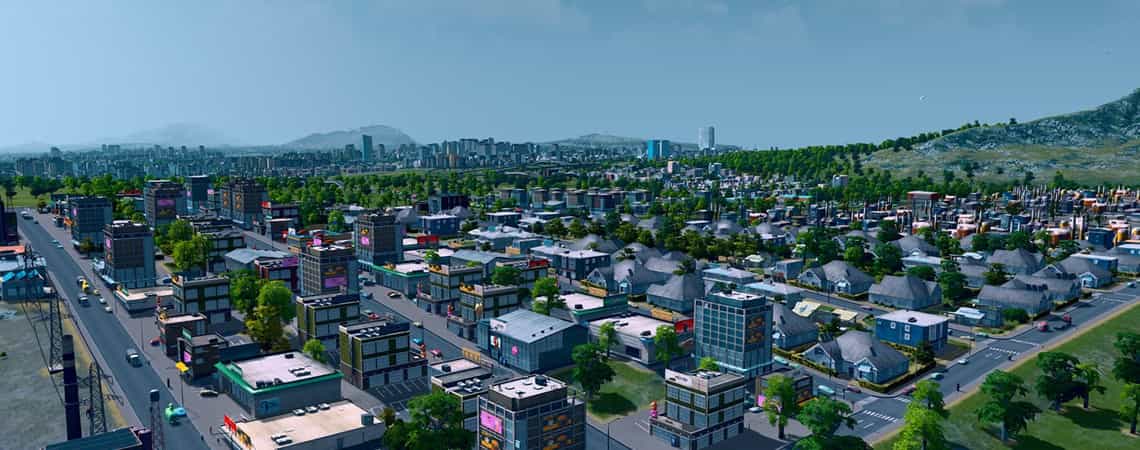
On top of that, every time you hit a milestone you get upgrades such as being able to take different sized loans, new types of buildings, and even buying new land to expand your city into. This new land (and indeed your own) can actually have certain benefits to it, such as being really great for agriculture or having an underground source of oil and coal. You can then exploit this land using your industry and just rake in the cash (sort of).
The main issue with Cities: Skylines is that it doesn’t always do a good job of telling you where you’ve gone wrong. For example, one issue that tends to crop up often is not realizing you have a ton of dead in your city, something which compounds itself until you get to an untenable situation.
Same goes for buildings that have been vacated and are sitting empty; you could assume that those buildings are functional when in reality they’re sitting there not making you any money.
In all fairness though, this only tends to be a problem as your city gets bigger, and even so, there are actually tons of mods to help with most of the issues that happen in the game. In fact, the modding scene for Cities: Skylines is so rich, it’s probably in the top 10 most modded games, so you’re almost certainly going to find something to your liking.
While there’s certainly more to go into in terms of what Cities: Skylines is and does, suffice to say it’s a truly excellent city builder and an instant classic. If you play and love tycoon and management games, this one is a must-play.
#8 Stardew Valley
Stardew Valley is the type of game that is more than the sum of its parts, and I say that because individually the mechanics are nothing that we haven’t seen before, but when put together they turn out into a pretty awesome game. Much like Cities: Skylines and other games like Stardew Valley, I have a feeling that I probably don’t need to go introduce and review this game, but I’m going to anyway because that’s what we’re about.

The story starts off with you working for a big megacorporation that is soulless and very soul-crushing. One day, you’re absolutely fed up with it and remember that your grandfather had left you a letter for this very day. Reaching into your drawer and opening, you find out that he’s bequeathed you the deed to some farming land, and with that, you set off to become a farmer.
Of course, once you arrive, the whole farm is basically dilapidated and you need to clean things up, and the game generally progresses in the same way as most Farming RPGs like Harvest Moon.
The farming aspect is pretty straightforward, with you being required to plant, water and harvest those plants, although there’s the added wrinkle of having several different plants that work in different seasons. So you really have to plan when you plant things because if they spill over to the next season, they’ll wither and die, leaving you with a pile of dead plants and a hole in your wallet.

In fact, in winter you don’t really get any plants that grow, so instead you’ll have to rely on your farm animals, which produce . . . produce that you can then sell or process into fancier stuff that cost more money (think mayonnaise and cheese).
Of course, the game would be monotonous if it was just the farming, and you have a whole town full of people that you can interact with and learn about. Unlike most RPGs, these NPCs aren’t super shallow and instead, you can develop quite a deep bond and understanding of who they are. In fact, you can even get married and have kids together (you can even do it with a same-sex partner, which is cool).
In between you framing and lovemaking, you can also go out into the dungeons and kill a bunch of mobs for materials, which you use to forge better tools. The combat is pretty similar to a Zelda game, so don’t expect anything out of the ordinary, but it does help break up the monotony a little bit. Thankfully, the dungeons are pretty deep and I’m not even sure if there’s an end to them.
Finally, there’s a fishing mechanic, with a whole host of different fish to try and capture, all appearing in different times, different seasons and different weather. All of this is helped with a pretty simple skill tree, as you’d expect in any RPG.
As you can see Stardew Valley is an incredibly deep game with just tons and tons of stuff to do. You could easily spend months on this game and probably not see all the content, which is pretty impressive for a game made by one person. Oh and he’s recently added a multiplayer mode so that you can play with your friends, which is pretty cool.
If you are just starting and need some tips, check out our Stardew Valley guide.
#9 Prison Architect
If you’ve always dreamed of building the perfect prison, then this game is made for you (also, you’re pretty weird). Of course, building and running a prison isn’t as simple as it may seem, even if the simple graphics of the game may make it seem that way. From budgetary issues to inmate breakouts, there’s always something going down in Prison Architect.

Now, while the game does have a short campaign mode, it acts more as a tutorial, albeit not a great one. It runs you through the stories of different inmates and really shows you the human cost of not just the prison system but crime itself. As you’re put through your narrative paces, the game does give some guidance on certain things that you need to build and do for your prison to stay solvent and ‘accident’ free.
Where you really get to learn the game though is in the sandbox mode, and this is where the tutorial doesn’t really come in very handy. Yes you are taught that canteens and showers are important, but it doesn’t teach you anything specific in terms of how you should be dealing with prisons, how to schedule them and or how the missions system works.
All of that, you sort of have to figure out on your own, which I guess is a great way to recreate the feeling of being in a prison. Once you do catch on though, the game becomes really fun, and you’re constantly working towards the next goal.

Since this is a privately run prison, a big part of your job is to be in the green, and you do that by having more inmates, as the government gives you money for each inmate that you have. It’s not that simple though, as there are three levels of inmates; from harmless to super dangerous, and each one requires their own amount of investment in terms of security.
The lowest risk prisoners can be given a bit more freedom and you can keep them in larger populations, whereas the high-risk prisons require you to have strict schedules, tons of guards and lots of security features.
Unfortunately, nobody likes being in a prison and your inmates will do their absolute best to get out, with the majority of attempts revolving around building tunnels. Thankfully, you do have some tools to work around that issue, such as shakedowns for drugs, weapons and other illicit material, to guard dogs that can sniff out tunnels. Of course, inmates aren’t happy when you crack down on them, and if you do it to often they might riot.
The sandbox mode also throws a bunch of different events in your face if you have them enabled. This can include things like the aforementioned riots, fires breaking out, or weird requests by the mayor such as removing an item that provides happiness. So really, keeping up with all the insane things that are going on becomes a full-time job, which . . . well, it is.
Aside from the campaign and the sandbox mode, there’s also an escape mod for you to try and break out of your own prisons, or prisons you’ve downloaded from the steam workshop. For this, you can buff up your character, collect reputation and form a gang or just try and break out solo if you’re smart enough.
Obviously, the challenge varies wildly depending on how well built the prisons you get are, so if you want a more prison escape style game, you’d be better served trying The Escapists 2.
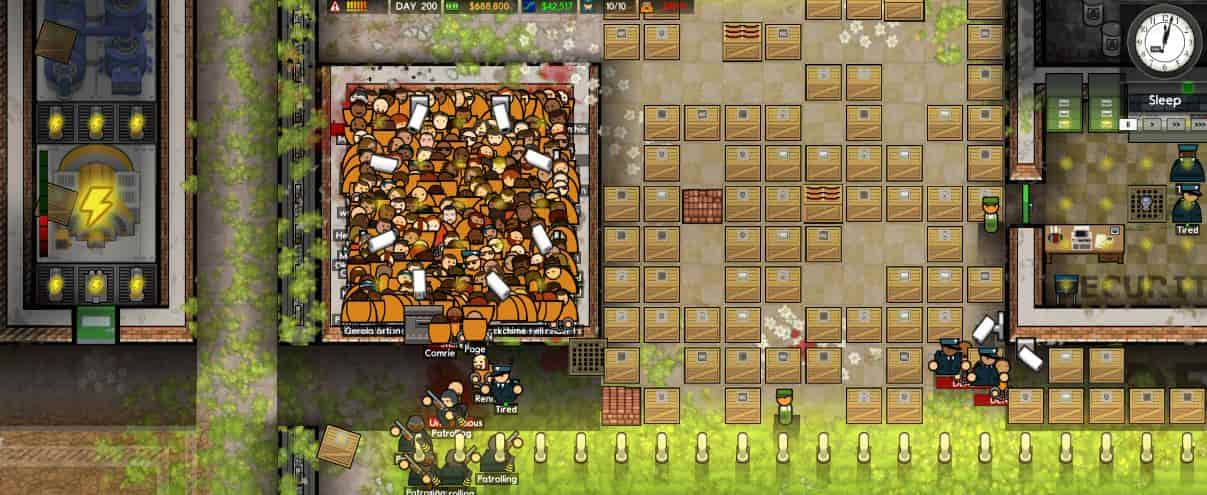
At the end of the day, as the inmates go to sleep or digging tunnels, Prison Architect offers a deep immersion like other excellent simulation games that like to keep you on your toes. True, it’s a bit hard to get into due to the lackluster tutorial, but once you get the hang of things, you’ll be building the perfect prison in no time. That is, until one of the inmates or the mayor screws it up.
#10 Game Dev Tycoon
Ok, so this is easily one of my favorite Tycoon games and I literally hope every day for a sequel to come out (although at this point it doesn’t seem like that’s ever going to happen). Starting you off in your garage in the ’70s with a super basic computer (including an old school CRT monitor), you have to set about building your game dev studio empire.

Doing so is actually pretty simple: you pick a genre, platform and features for your game to have, and as time goes by, you slowly fill up a meter, and once that meter is filled up, you release it to rave reviews and lots of sales. Well, you would if you didn’t know the game was deceptively simple.
You see, what makes a game successful in Game Dev Tycoon relies a lot on the genre, the platform you make it on, what focus you have as you develop the game and things of that nature. So in a sense a lot of the time you do spend trying out different combos to see what works. Thankfully, you can generate reports on each game which give you hints on what stuff works together well and other tips on how to make your games more successful.
It doesn’t stop there though and once you’ve made enough money, you can upgrade your digs to a proper office wherein you can hire developers to help you out. You see, as you progress you can research new genres and even build your own engines, all of which increase the complexity of the game and how much meter you need to fill before the time runs out.

The more people you have with higher skills, the more development you can put into the game and the better it will turn out. Finally, once you reach the top you can start developing your own consoles, MMOs and even your own digital store (a la steam). There are absolutely tons of things to do in the game and there’s barely ever a dull moment.
That being said, it can get frustrating when several of the mixes you try fail in a row and your money starts dwindling and dwindling. For that, you can actually take on side jobs to help bring your budget back up, although it’s not always a lot of money and if you fail them, they actually take money from you. So really, you need to be on top of your game (yes, the pun is totally intended).
Game Dev Tycoon is one of those charming and quirky games that you can finish in a few hours and thoroughly enjoy every minute of it. It also has a great replayability factor, as you’re unlikely to unlock or try everything in the first go, and it can be fun experimenting to see what works best.
Final Verdict
As you can see, there’s a fair variety of tycoon games out there for even the hungriest of you tycoon gamers. I’m not sure whether you’ll find all the games on this list interesting, but hopefully one or two sparks your interest. Actually, if I may step out on a limb here, I’d say that probably all the games on the list are must-plays for big tycoon game fans as they all offer something new or interesting to the genre.
Either way, regardless of what games you end up playing, I hope you enjoy them and all the best of luck!